
Bracell Social helps train public school professionals in the regions of Litoral Norte and Agreste Baiano, Recôncavo, and Portal do Sertão
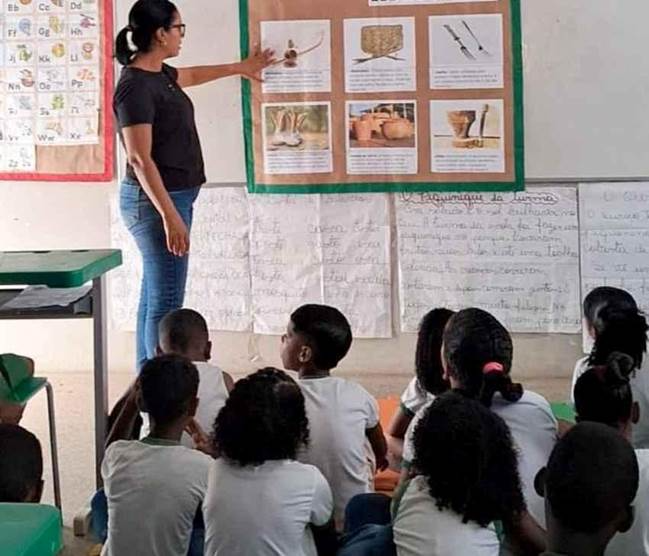
The results of the Basic Education Development Index (IDEB) 2025, an indicator created by the federal government to measure the quality of teaching in public schools, released this Wednesday, the 5th, reinforce the progress of education in the municipalities of the Northern Coast and Agreste Baiano, Recôncavo, and Portal do Sertão regions, supported by the Continuing Education Project, which is carried out by Bracell Social in technical partnership with the Chapada Institute of Education and Research (ICEP). Of the 12 municipalities participating in the initiative in Bahia, 10 recorded growth compared to the 2023 cycle, highlighting the progress of actions for the development of basic education in these regions. They are: Alagoinhas, Aramari, Araçás, Aporá, Cardeal da Silva, Cachoeira, Conde, Entre Rios, Itanagra, and Ouriçangas. Two other cities, Terra Nova and Inhambupe, which are also part of the project, maintained the same results as the previous survey.
Created 12 years ago, Bracell’s Continuing Education Project focuses on training professionals in the education networks, helping to strengthen a public policy of continuous training that is integrated into teaching practices. Through improving teaching quality, the initiative aims to raise the level of student learning in partner municipalities.
Eliene Rodrigues, the pedagogical technical director of the Municipal Department of Education, Culture, and Tourism in Cardeal da Silva, highlights that the project is an important partner for education in the city. Along with the municipal administration, it helps strengthen the city’s continuous training policy. Cardeal da Silva stood out in IDEB 2025, reaching a score of 5.4, with an increase of 1.5 points from the 2023 indicator. “The activities offered by the Continuing Education Project contribute significantly to strengthening teaching practices in Reading and Math, enhancing planning the monitoring of learning and classroom work. These results represent the collective effort of the municipality, stemming from the commitment of the municipal administration, the ongoing support of the Department of Education, the dedication of the school teams, the partnership with families, and the support of Bracell. We believe that improving education is built collaboratively, always keeping the student at the center of all actions,” he points out.
Another highlight is Aramari, a municipality that raised its IDEB from 5.1 to 5.7, surpassing the projected target of 4.8 by 0.9 points and matching the state average. Eline Bomfim, coordinator of João Pereira dos Santos Municipal School in Catuzinho, Aramari, emphasizes that the project’s actions contributed to this result. “The training offered by Bracell together with ICEP brings strategies and materials that connect with the students’ reality, valuing topics like rural education, identity, Quilombola culture, and anti-racist education. These are practical activities that encourage reading and writing and enrich daily classroom life, contributing to quality learning and achieving positive results like this IDEB score,” says Eline Bomfim.
Cíntia Liberato, Communications and Institutional Relations Manager at Bracell, celebrates the IDEB 2025 results of all project participants. “The analysis of IDEB 2025 shows a positive scenario for the areas where Bracell operates, as most municipalities saw an increase in performance and there were no recorded setbacks in the assessments. This scenario highlights the value of the work carried out by municipal education networks and the collaboration among different stakeholders for the sake of education. Through the continuous training of educators, Bracell Social aims to strengthen public education, expanding opportunities in the municipalities where Bracell is present,” says the manager, emphasizing that Bracell believes education is a central pillar in developing a fair and equal society for everyone.
Standout municipalities in the IDEB 2025 project
Besides Cardeal da Silva, Aporá also showed one of the biggest absolute improvements in the IDEB assessment, with a 1.4-point increase compared to 2023. Another notable result was Araçás surpassing its projected goals, reaching an IDEB of 5.4, above the target of 5.2, and Cardeal da Silva, which also reached 5.4, exceeding its target of 5.1. Ouriçangas hit the expected index of 5.0.
The pedagogical coordinator at Icep, Ana Cristina Falcão, points out that the performance shown by all the municipalities reflects a positive scenario, still marked by the challenges of making up learning after the pandemic. “The results show that strengthening pedagogical management, systematically monitoring educational indicators, and providing ongoing training for technical teams, managers, pedagogical coordinators, and teachers have been helping to build a culture of tracking learning and making evidence-based decisions,” she says.
Advances in Reading and Math
Besides the growth in IDEB, the results of proficiency assessments show significant progress in Reading and Math between 2023 and 2025 in the municipalities participating in Bracell’s Continuing Education Project. In Reading, Aramari, for example, had the highest growth in the region, going from 186.23 to 219.15 points, establishing itself as the highest-performing network in 2025. Aporá also showed significant improvement, with a gain of 27.6 points, followed by Cardeal da Silva (+25.2 points), Araçás (+13.1), Ouriçangas (+12.7), and Alagoinhas (+7.6).
In the Math assessment, Cardeal da Silva led the growth, moving from 173.94 to 203.28 points, an increase of about 29 points. Other notable improvements were seen in Cachoeira (+21.1 points), Conde (+18.8), Araçás (+16.0), Itanagra (+15.3), Alagoinhas (+7.5), and Aramari (+4.3).
About Bracell Social
Bracell Social is Bracell’s social investment arm, guided by three main pillars: education, empowerment, and well-being. The initiative aims to contribute to economic development and improve the quality of life in the communities where the multinational operates. Through 23 initiatives across these three areas, Bracell strengthens educational and environmental practices, carries out training, entrepreneurship, and income-generating actions, as well as initiatives that promote health, citizenship, and culture.